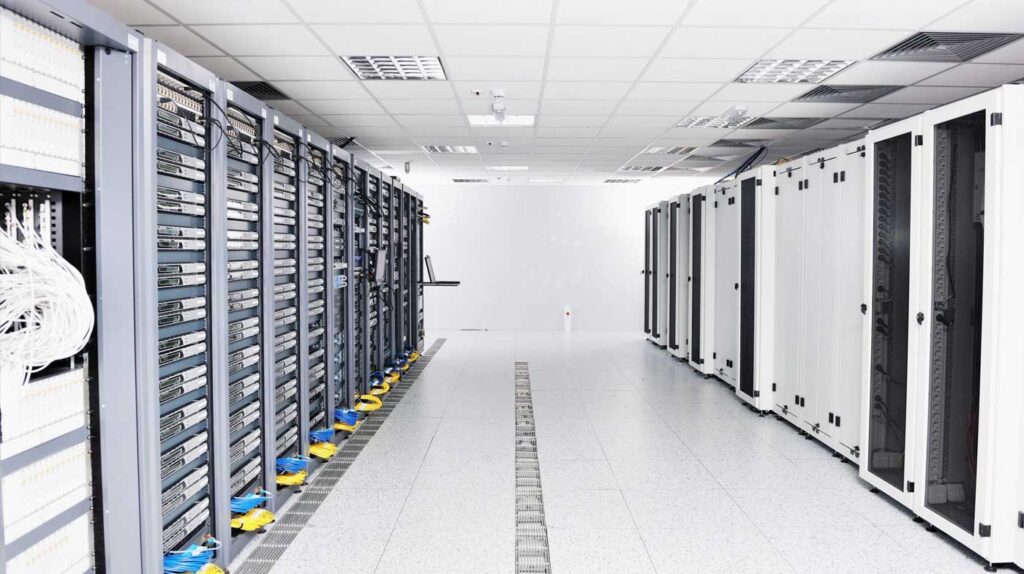
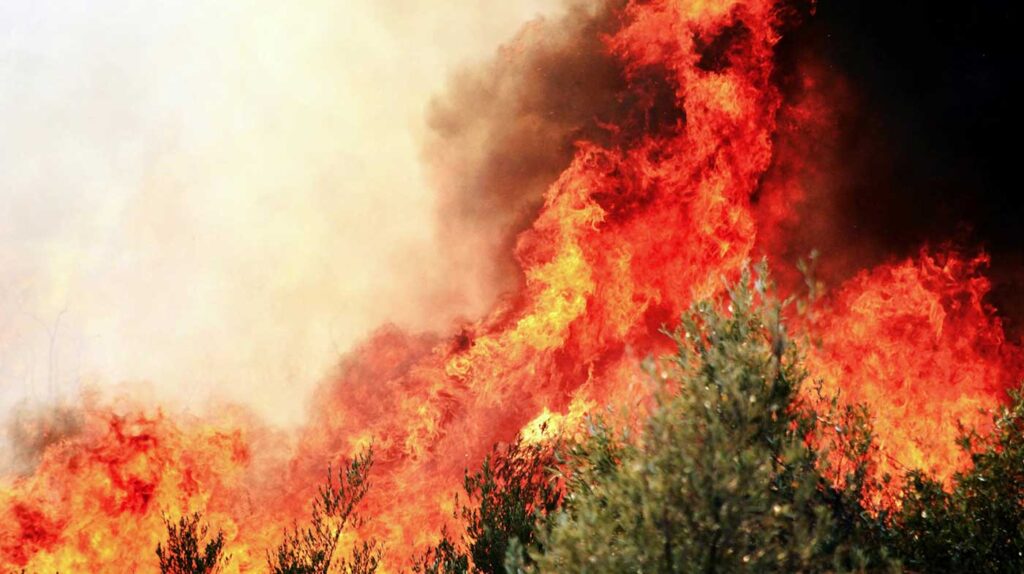
For decades, data center cleaning was viewed through a relatively narrow lens: removing cardboard fibers from the staging area, vacuuming subfloor plenums to prevent zinc whiskers, and wiping down server cabinets to maintain aesthetic and functional standards. However, as wildfire seasons intensify and urban air quality reaches record lows, a new, more insidious threat has emerged.
Wildfire smoke is no longer just a “rural” or “West Coast” problem. Due to atmospheric jet streams, smoke from massive wildland-urban interface (WUI) fires can travel thousands of miles, settling over major urban financial hubs and tech corridors. For data center operators, this represents a fundamental shift in risk management. This isn’t just “dust”—it is a complex, chemically reactive, and conductive cocktail that can bypass traditional filtration and strike at the heart of server reliability.
1. The Anatomy of Urban Wildfire Smoke
To protect a facility, one must first understand the enemy. Wildfire smoke is a suspension of solids, liquids, and gases. When wildfires consume not just forests but also suburban developments, the smoke changes from “natural” wood ash to a toxic mix of burned plastics, treated lumber, electronics, and vehicle remains.
The Conductive Carbon Problem
Unlike standard indoor dust (which is largely composed of skin cells and clothing fibers), wildfire smoke is rich in carbon black and conductive ash. These particles are often smaller than 2.5 microns allowing them to remain airborne for weeks.
-
Conductivity: Carbon is an excellent conductor of electricity. If these microscopic particles settle on high-density circuit boards, they can create “bridge” paths between solder points, leading to intermittent signal noise, “soft” errors, or catastrophic short-circuiting.
-
Corrosivity: Smoke contains nitrogen oxides ($NO_x$) and sulfur dioxide ($SO_2$). When these gases interact with the high humidity often found in cooling systems, they form weak acids that eat away at the delicate gold and copper plating on connectors.
The PM2.5 Infiltration Gap
Standard data center pre-filters (MERV 8 or 11) are designed to catch large dust motes and hair. They are essentially “sieves” for PM2.5 particles. Research from the 2024–2026 wildfire seasons shows that during heavy smoke events, indoor PM2.5 levels in buildings without specialized filtration can reach 70% of outdoor levels within hours.
2. HVAC Vulnerabilities: The First Line of Defense
In an urban data center, the HVAC system is the primary entry point for smoke. While many facilities use economizers to bring in outside air for “free cooling,” this practice becomes a liability during a smoke event.
The “Thermal Blanket” Effect
When soot and ash enter the cooling stream, they don’t just affect the servers; they coat the cooling coils (heat exchangers). This creates a “thermal blanket” that reduces the efficiency of heat transfer. To compensate, the system must ramp up fan speeds and compressor loads, leading to:
-
Higher Energy Costs: The PUE (Power Usage Effectiveness) of the facility spikes.
-
Increased Component Wear: Fans running at 100% capacity fail faster.
-
Pressure Drop: As filters clog with fine ash, the “pressure drop” across the filter bank increases, potentially starving the data hall of air.
The Economizer Trap
Most modern data centers are programmed to maximize outside air when temperatures are low. Without a “Smoke Mode” override, the BMS (Building Management System) may unknowingly pull in thousands of cubic feet of smoke-laden air because it only sees “cool” air, not “dirty” air.
3. The Specialized Cleaning Protocol: A Technical Guide
When a wildfire event occurs, a standard “mop and bucket” approach is insufficient. Remediation must be technical, measured, and systemic.
Step 1: The HVAC “Deep Coil” Restoration
Once the smoke clears, the first priority is the mechanical room.
-
Coil Cleaning: Use a pH-neutral, non-foaming technical cleaner to strip soot from the aluminum fins of the cooling coils. Acidic cleaners should be avoided as they can react with leftover ash to cause further corrosion.
-
Plenum Wipe-down: The interior of the Air Handling Units (AHUs) must be wiped down using lint-free, antistatic cloths. Ash often hides in the “dead zones” behind fan motors and dampers.
Step 2: Emergency Filter Graduation
During the event, operators should consider a “Step-Up” filtration strategy:
-
Temporary HEPA: If the system can handle the static pressure, move from MERV 11 to MERV 14 or 15.
-
Gas-Phase Filtration: In extreme cases, carbon-scrubbing filters (activated carbon) should be added to the intake to neutralize the corrosive gases that physical filters cannot catch.
Step 3: The “Source-Capture” Subfloor Vacuuming
Ash that reaches the data hall will inevitably settle in the subfloor plenum—the very place where cold air is pressurized.
-
The Risk: Every time a floor tile is pulled or a fan ramps up, that settled ash is “re-entrained” into the air and blown directly into the servers.
-
The Fix: Use ULPA-filtered (Ultra-Low Particulate Air) vacuums. Standard HEPA vacuums are 99.97% efficient at 0.3 microns; ULPA vacuums go a step further, reaching 99.999% efficiency at 0.12 microns—the exact size range of many smoke particulates.
4. Monitoring and ISO Compliance
To manage what you can’t see, you must measure it. Data center cleanliness is governed by the ISO 14644-1 standard.
Real-Time PM2.5 Monitoring
Don’t wait for the annual audit. Modern facilities are now installing low-cost laser particle sensors at the intake and at the farthest point from the cooling source.
Pro Tip: If your “Cold Aisle” particle count is significantly higher than your “Hot Aisle” count, your cooling system is introducing contaminants. If the “Hot Aisle” is higher, your equipment is likely shedding debris or “cooking” settled dust.
The “Witness” Test
Professional cleaning crews should provide a “Post-Event Air Quality Report.” This document proves to stakeholders and insurance providers that the facility has returned to an ISO Class 8 (or better) environment.
5. Financial and Legal Implications
The cost of a deep-clean after a wildfire event might seem high, but it is a fraction of the cost of equipment failure.
-
Insurance Mitigation: Many property insurance policies cover “smoke damage.” However, to file a successful claim for electronic equipment, you must prove that the smoke actually infiltrated the space. A documented particle count spike followed by a professional remediation log is your best evidence.
-
Warranty Protection: Server manufacturers like Dell, HPE, and IBM have strict environmental requirements. If a motherboard fails and the technician finds a layer of conductive soot, the warranty may be voided under “environmental neglect.”
Conclusion: Building a Resilient Future
Wildfire smoke is the “New Normal” for the urban data center. As the boundary between wildlands and cities blurs, the air we breathe—and the air our servers breathe—is changing.
By moving away from reactive cleaning and toward a technical, proactive Smoke Mitigation Protocol, operators can ensure that their facility remains a true “clean room,” regardless of what is happening outside the walls. The goal is no longer just to keep the floor looking shiny; it is to protect the microscopic pathways of the digital economy from the conductive, corrosive power of the modern wildfire.