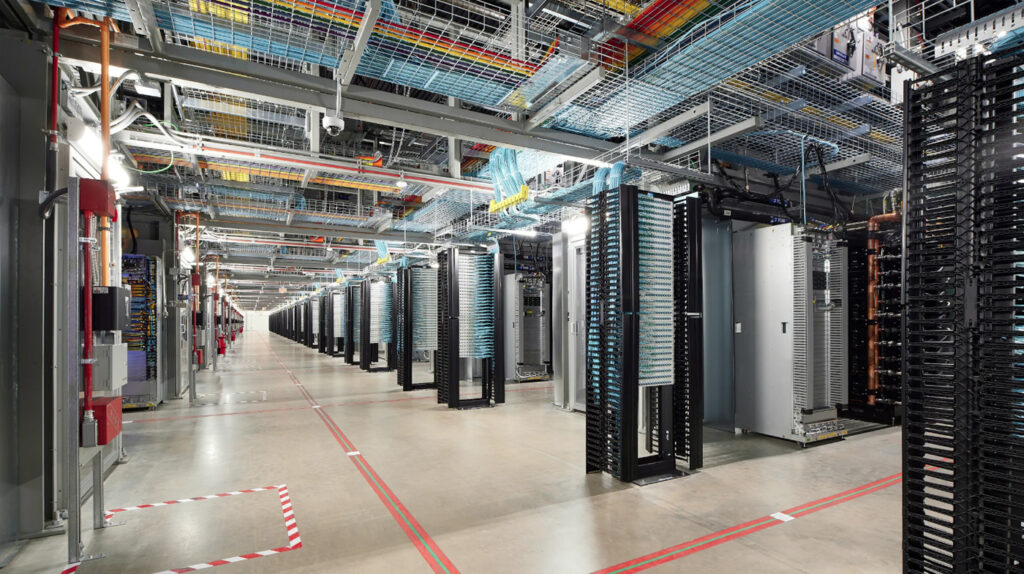
In modern data center operations, maintaining white space hygiene is no longer just a matter of keeping things visually neat—it is a core requirement for SLA compliance, hardware warranty validation, and risk mitigation.
When enterprise tenants, insurance underwriters, or third-party auditors evaluate a critical facility, they look beyond polished floor tiles. They inspect whether the environment meets recognized international cleanliness standards—specifically ISO 14644-1 Class 8.
Meeting and maintaining this benchmark requires a clear understanding of what ISO particle counts actually mean, how contamination enters the white space, and why standard janitorial methods fall short of audit requirements.
What is ISO 14644-1 Class 8?
Originally developed for cleanrooms in pharmaceutical and semiconductor manufacturing, the ISO 14644-1 standard classifies air cleanliness based on the concentration of airborne particles per cubic meter of air.
For data centers and mission-critical facilities, ISO 14644-1 Class 8 is the universally recognized benchmark.
To achieve ISO Class 8 compliance, the airborne concentration of micro-particles within the white space must not exceed specific thresholds.
Why Audit Compliance Matters for Mission-Critical Facilities
Failing an environmental audit or operating without certified particle reporting creates tangible operational and financial risks:
-
SLA Violations & Tenant Penalties: Colocation providers are increasingly bound by Service Level Agreements (SLAs) that specify strict environmental parameters. Exceeding particle limits can trigger financial credits or contractual disputes.
-
Warranty Voidance: Leading OEM hardware manufacturers specify maximum environmental particulate levels in their warranty terms. Uncontrolled airborne dust can serve as grounds for denied warranty claims on failed server blades or power supplies.
-
Corrosion & Short Circuits: Fine particles carrying sulfur, chlorides, or metallic traces absorb ambient moisture, leading to gaseous corrosion or conductive bridging across high-density circuit boards.
The Auditing Gap: Janitorial vs. Technical Decontamination
A common failure point during environmental audits is relying on general commercial janitorial crews. Standard cleaning practices often increase airborne particle counts rather than reducing them:
-
Mops and Standard Vacuums: Standard janitorial vacuums lack true, sealed HEPA/ULPA filtration, blowing fine micro-particles back into the air column. Sweeping or dry-wiping dislodges settled dust from surfaces, spiking particle counter readings during audits.
-
Chemical Residues: Off-the-shelf cleaning chemicals introduce Volatile Organic Compounds (VOCs) and leave non-conductive residues on raised access floor tiles, disrupting the static-dissipative path to ground.
-
Human-Introduced Debris: Uncontrolled technician access without proper anti-static footwear, cleanroom-grade wipes, or entry protocols continuously replenishes airborne particulate matter.
How CFS Delivers Documented ISO Compliance
At Critical Facility Solutions (CFS), our environmental decontamination protocols are built around achieving and certifying ISO 14644-1 Class 8 compliance for white space, subfloor plenums, and overhead infrastructure.
Our technical process includes:
-
Laser Particle Counter Auditing: We utilize calibrated, cleanroom-grade laser particle counters to sample air columns across high-density aisles, intake vents, and subfloor plenums, establishing precise baseline data.
-
Sealed ULPA Extraction: Our technicians use specialized, static-safe ULPA vacuums (filtering down to 0.12 microns at 99.999% efficiency) to capture microscopic dust without generating Electrostatic Discharge (ESD) or redistributing particles.
-
ESD-Safe Surface Decontamination: We clean cabinet exteriors, server faces, overhead cable trays, and raised floor tiles using specialized, static-dissipative solutions and lint-free microfiber materials.
-
Comprehensive Chain-of-Custody Documentation: Following every cleaning engagement, CFS provides a formal Certificate of Environmental Cleanliness, complete with pre- and post-cleaning particle count readings, floor grid mapping, and audit-ready documentation for your compliance files.
Is Your Facility Audit-Ready?
Maintaining ISO 14644-1 Class 8 compliance is an ongoing operational discipline, not a one-time event. Routine, certified technical cleaning protects your infrastructure investments, satisfies auditor requirements, and guarantees your white space meets international standards.
Need to verify your facility’s environmental compliance? Contact Critical Facility Solutions today to schedule an ISO baseline particle audit and custom white space decontamination review.